 The Fitness Research
Know what actually works.
We checked 42 rules people repeat about training, food and sleep against the studies that tested them. Then we wrote a book and a workbook, so you can keep the habits that hold up and drop the ones that don’t.
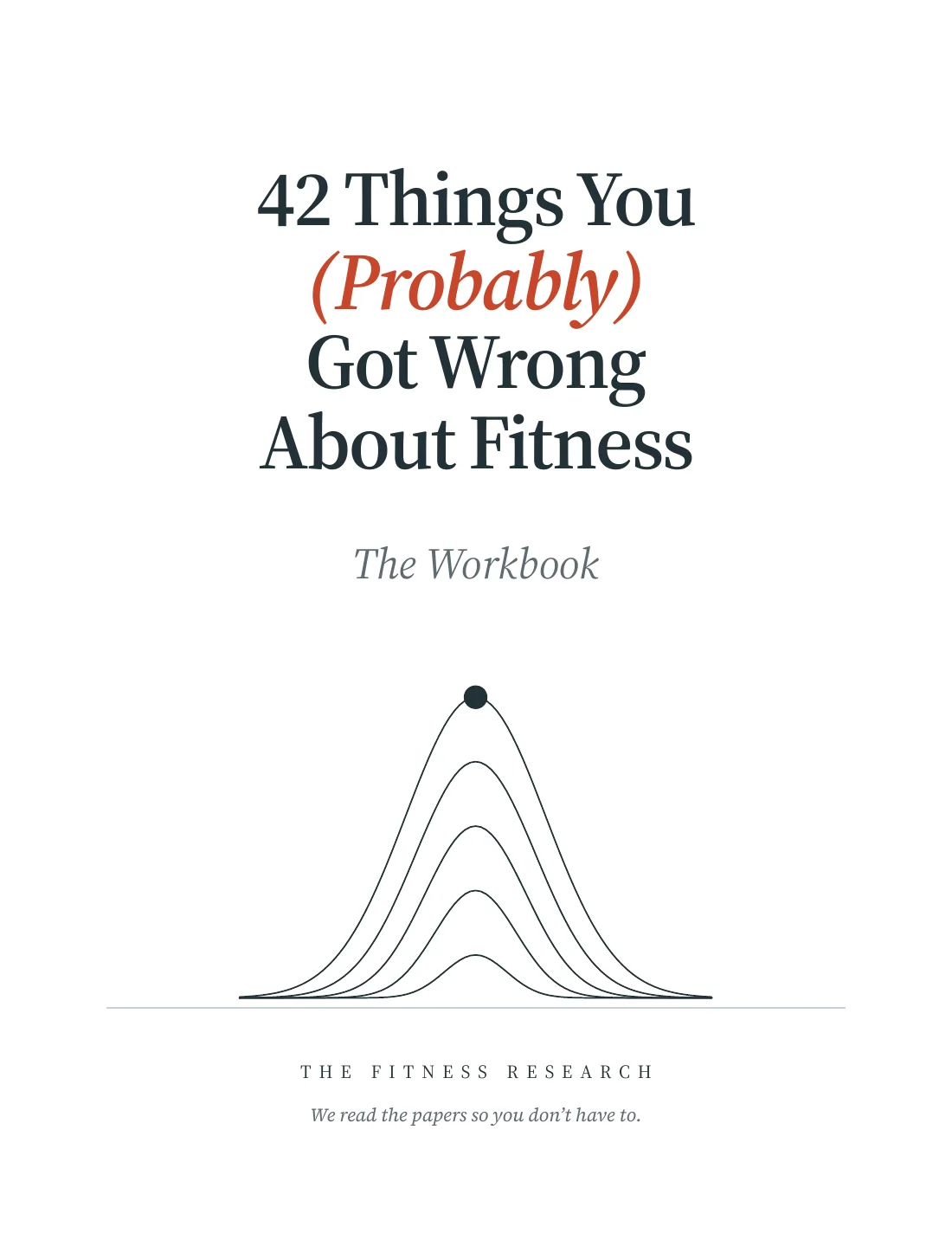
- The book: 42 Things You (Probably) Got Wrong About Fitness, every study named
- The Workbook, free: the protocols, the 30-day plan, the checklist and the home test sheets
Instant download · 3-day money-back guarantee
You’ve probably heard a few of these
Keep pounding the pavement and you’ll destroy your knees.
The warning runners hear, as NBC News reported it in 2023Running, not weights, burns fat
A Fox News headline from 2012Will I lose all my gains in 2 weeks
Something people type into Google
Some rules like these are right and some aren’t, and most people never find out which. The studies that tested them sit in journals that charge to read them and are written for other researchers. The loudest advice usually comes from someone with a supplement to sell.
We started The Fitness Research to read those papers for you. Each reel takes one rule, shows who was tested and what they did, and says what happened. This book is 42 of them, written out properly, with the parts a reel has no time for.
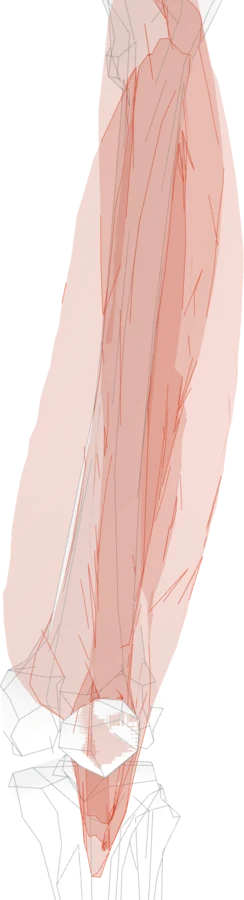
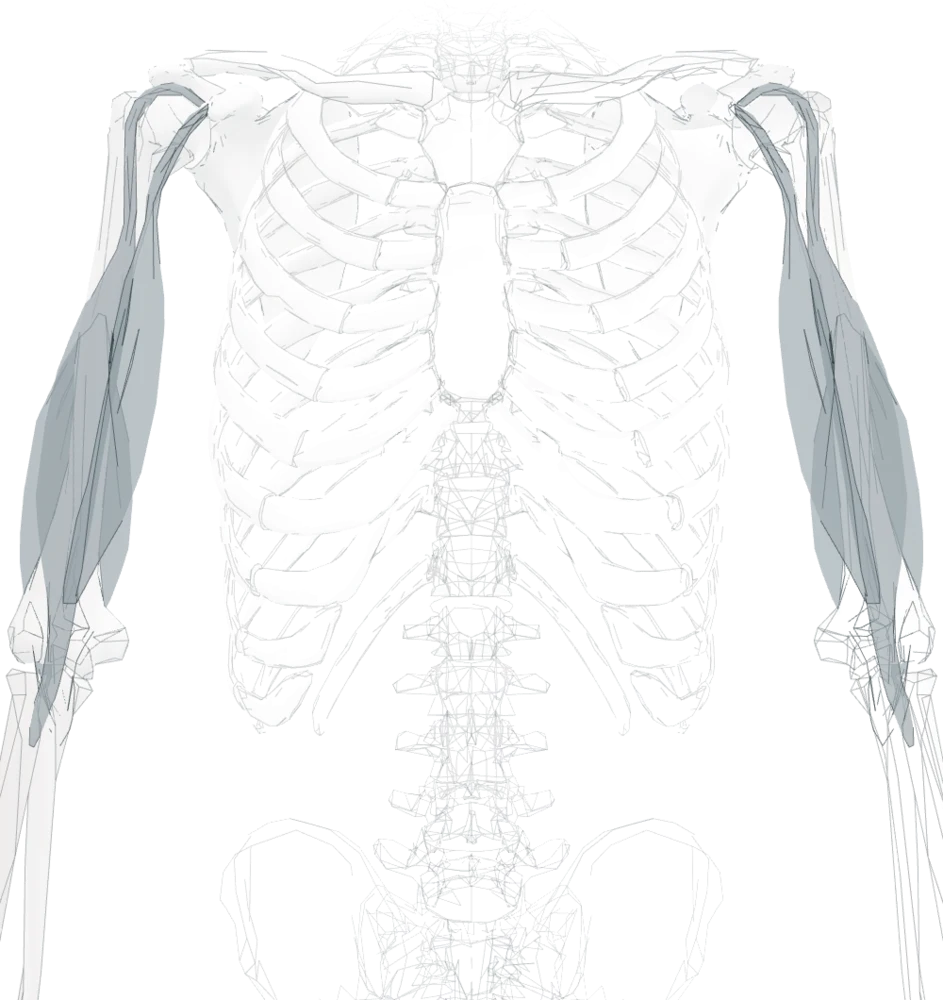
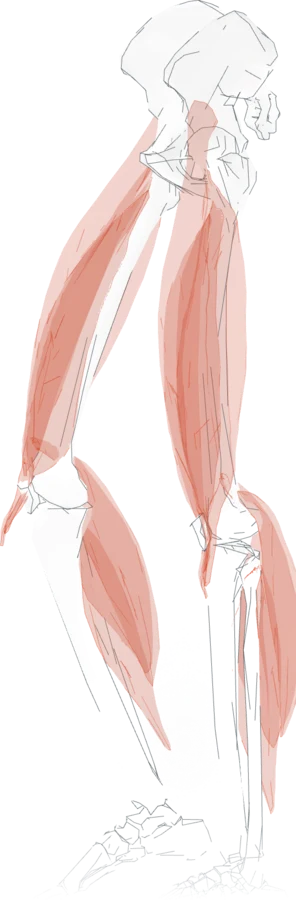
Two real pages from the book
The first two pages of the chapter on stretching before training, as they’re printed.
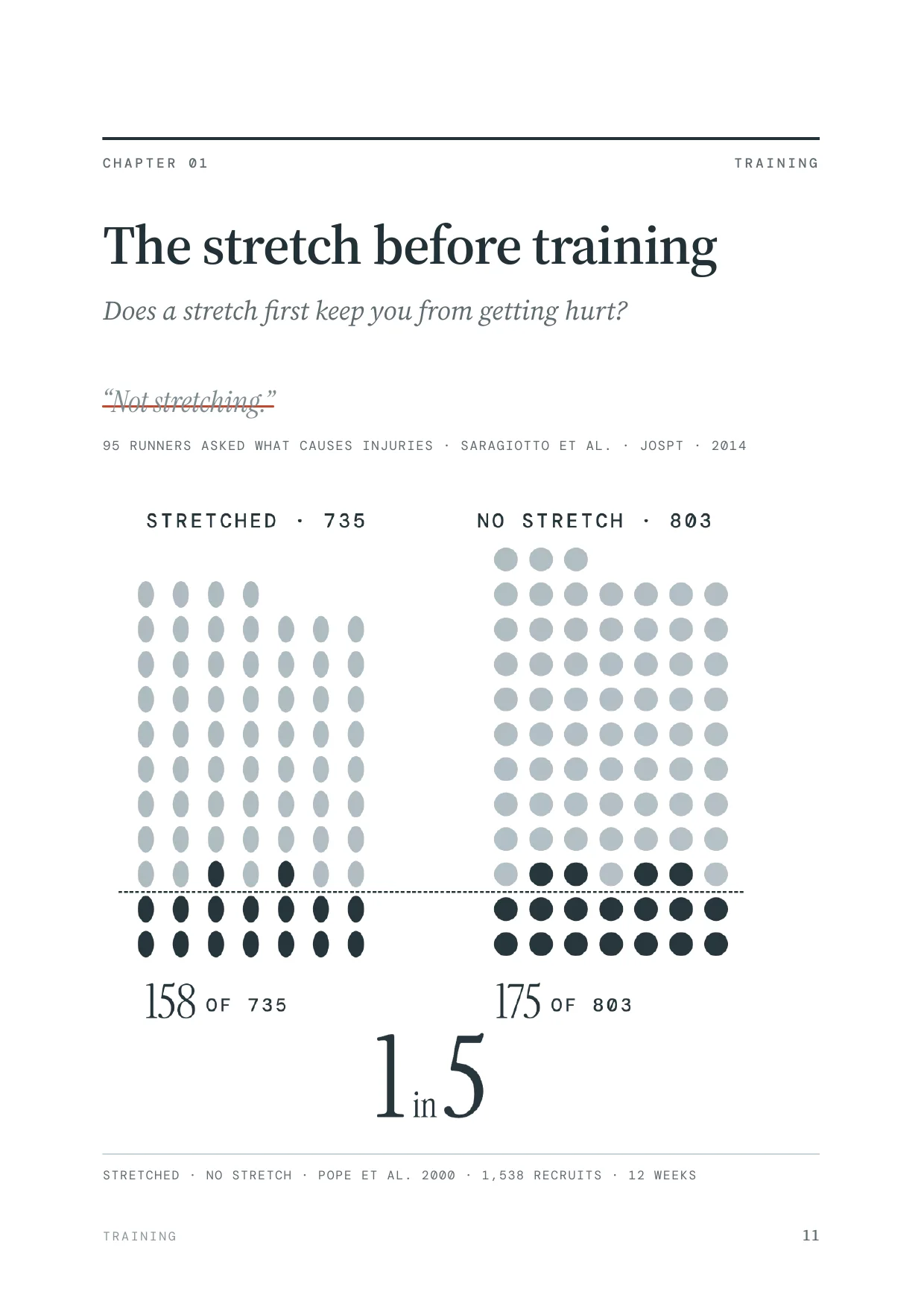
1The rule as people say it, and the result drawn as dots
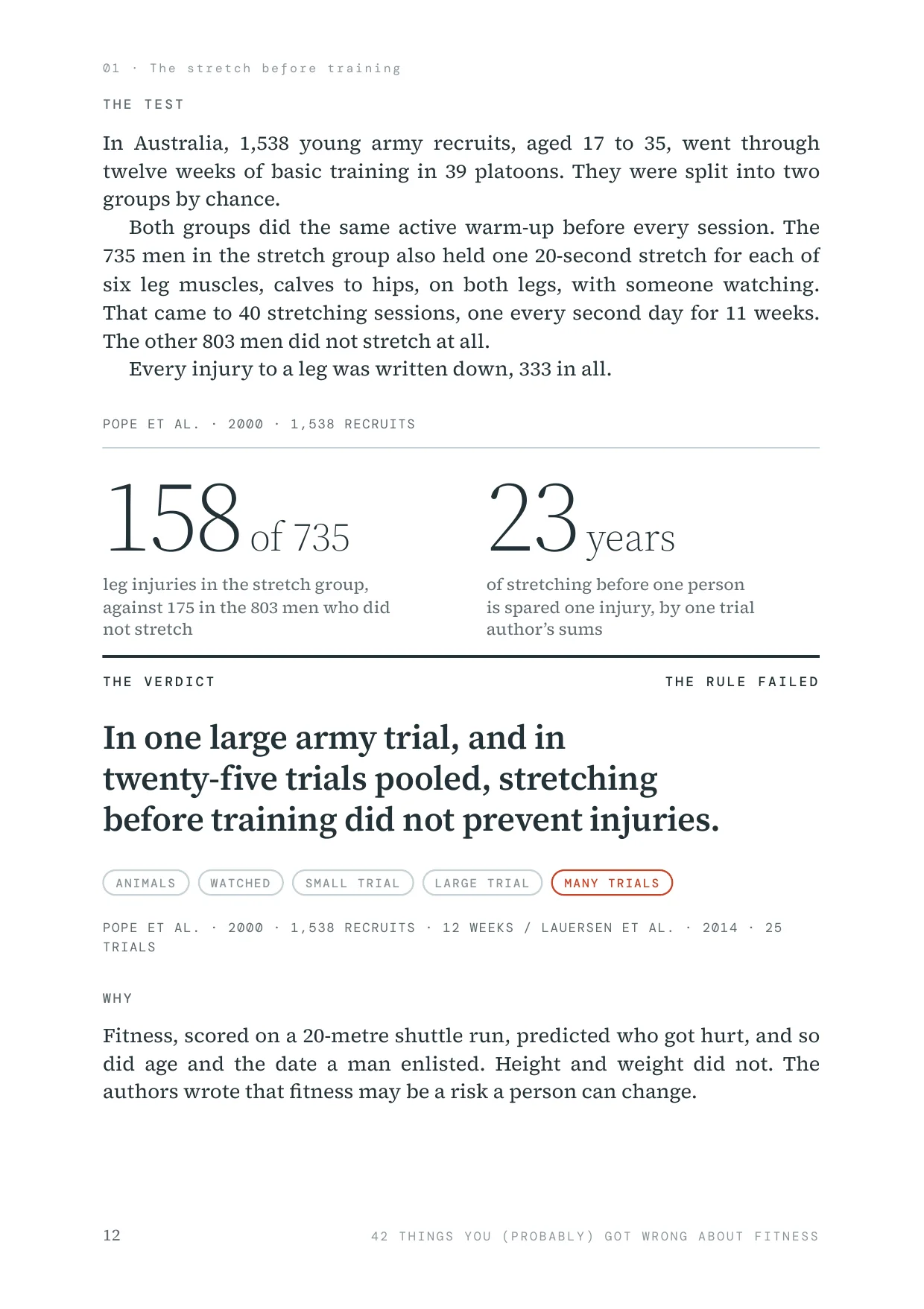
2What happened, in numbers
3The verdict, and how strong the evidence is
Tap a page to read it at full size.
Every verdict is marked on this scale. This one is near the top. Most of the 42 rest on one small trial, and we’d rather tell you that than round it up.
The page after this says what to do, with the amounts the study used.
42 chapters in six parts
The chapters are sorted by where they turn up in your week, so you can start with whichever part you care about and leave the rest for later.
- Part one · 14 myths
Get more from every session
The things people argue about at the gym, like how heavy to lift, how long to rest and whether cardio cancels out weights. The last chapter asks whether there’s an age when it’s too late to start.
- Part two · 6 myths
Recover without losing progress
What soreness means, and whether ice baths, saunas and easy weeks help the work you just did or get in its way. The cold and heat chapters come with a safety note.
- Part three · 4 myths
Sleep better
How much you need, whether a lie-in makes up for a bad week, and what late dinners and a lit bedroom do to you. None of it costs anything.
- Part four · 7 myths
Eat with less guesswork
Protein, eggs, breakfast, processed food, and whether you really need to weigh what you eat. There’s no diet in here, and no food you’re told to fear.
- Part five · 5 myths
Move more on busy days
The movement that fits into a working day, such as taking the stairs or walking after dinner. You won’t need to change clothes for most of it.
- Part six · 6 tests
Know where you stand
Six short tests, most of which you can do at home. Each one compares your score with the people in its study and tells you what to work on if it’s low. A low score is a reason to train, and it isn’t a diagnosis.
Every study is listed at the back, chapter by chapter, so you can look up any of them. Everything you print and use is in the Workbook.
The Workbook
The book is for reading. Everything you print and use is in the Workbook, and every copy comes with it.
You start with the home tests and write down your scores. Then you follow the 30-day plan, one change a day, and tick each one off. The protocols are cards you cut out and keep where you’ll see them, and the checklist puts every change in the book on one page. Three months later you do the tests again to see what moved.
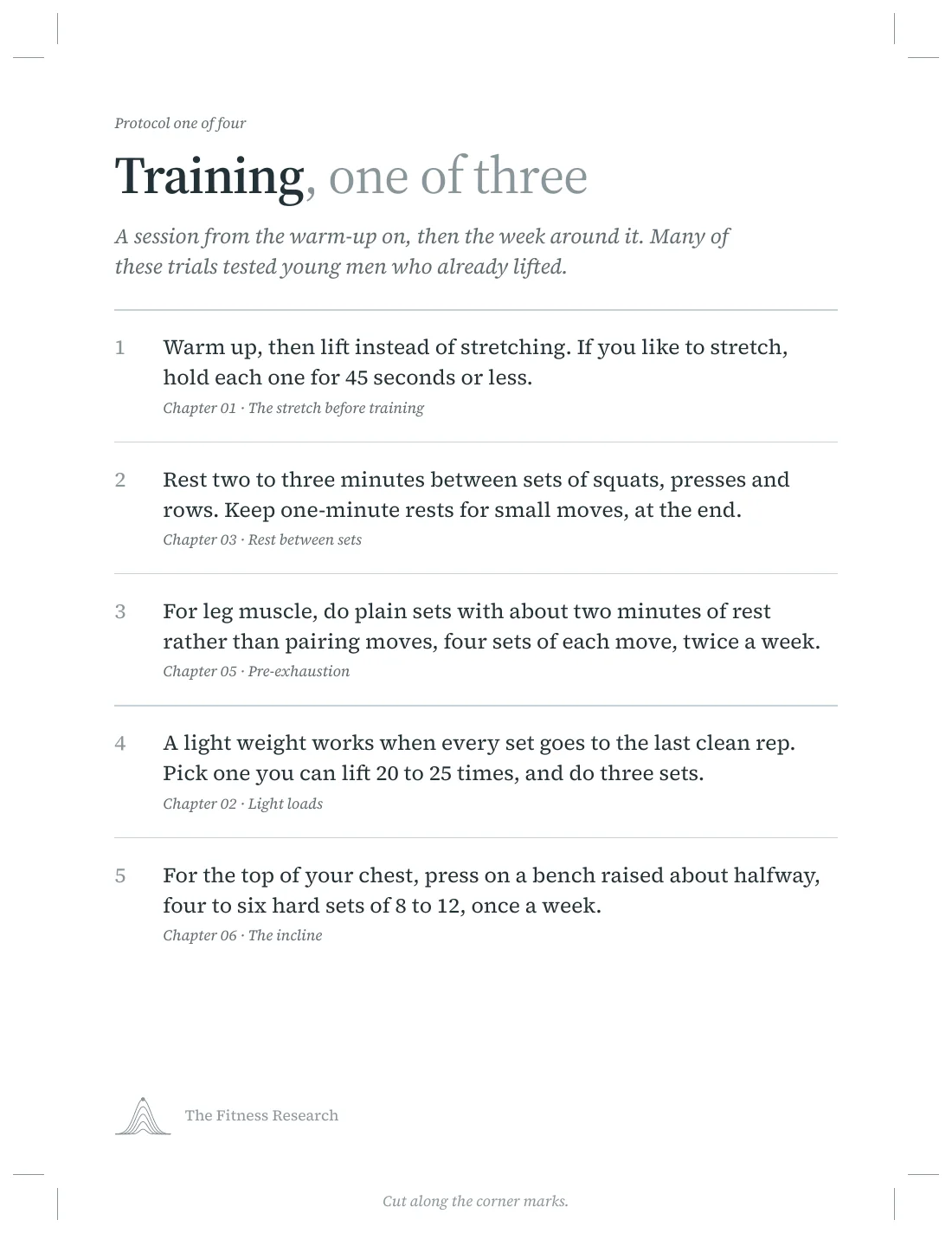
The four protocols, as cards
Short routines for training, food, recovery and sleep, and the desk day, to cut out and pin up.
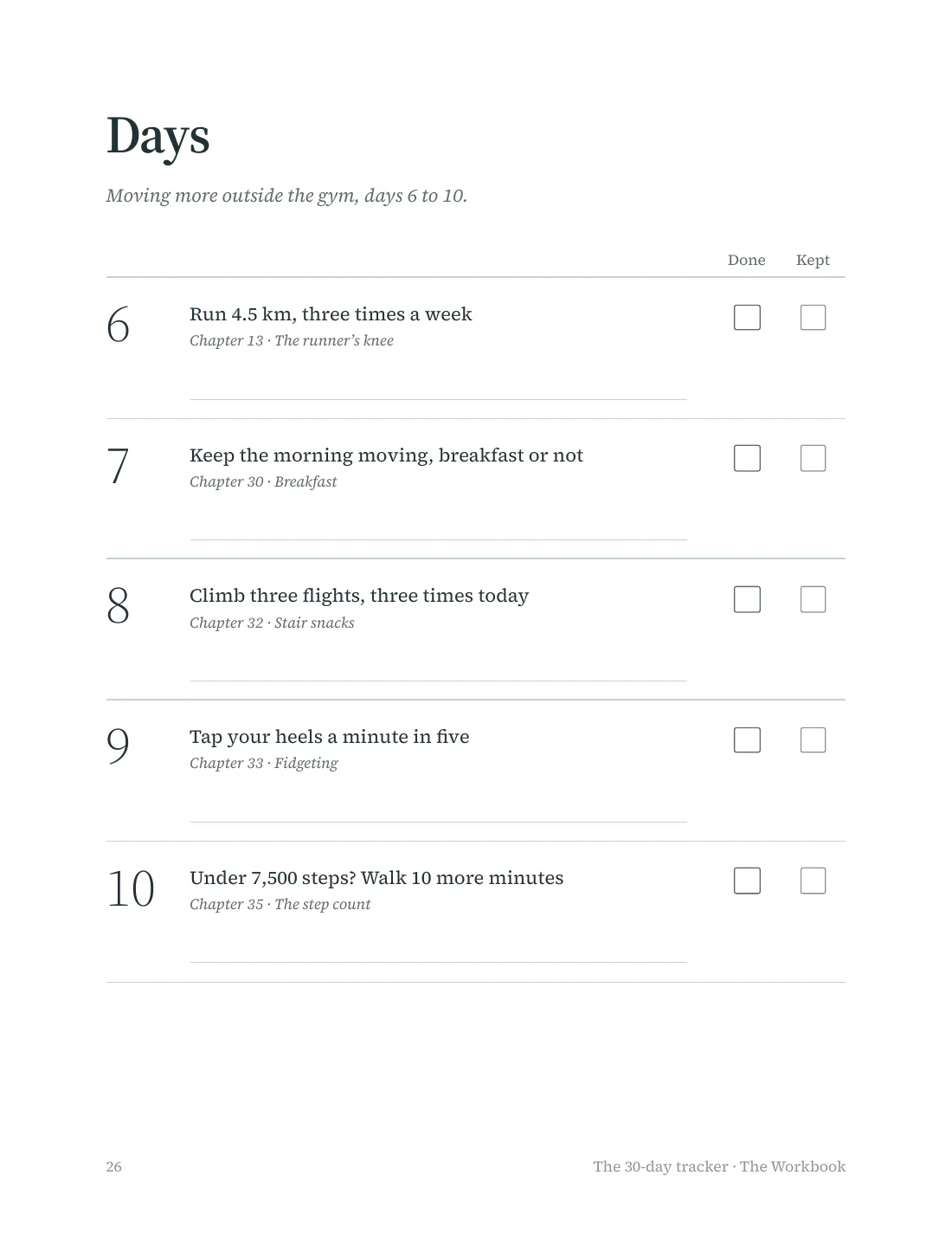
The 30-day plan
One change a day, each with the chapter it comes from and a box to tick when it’s done.
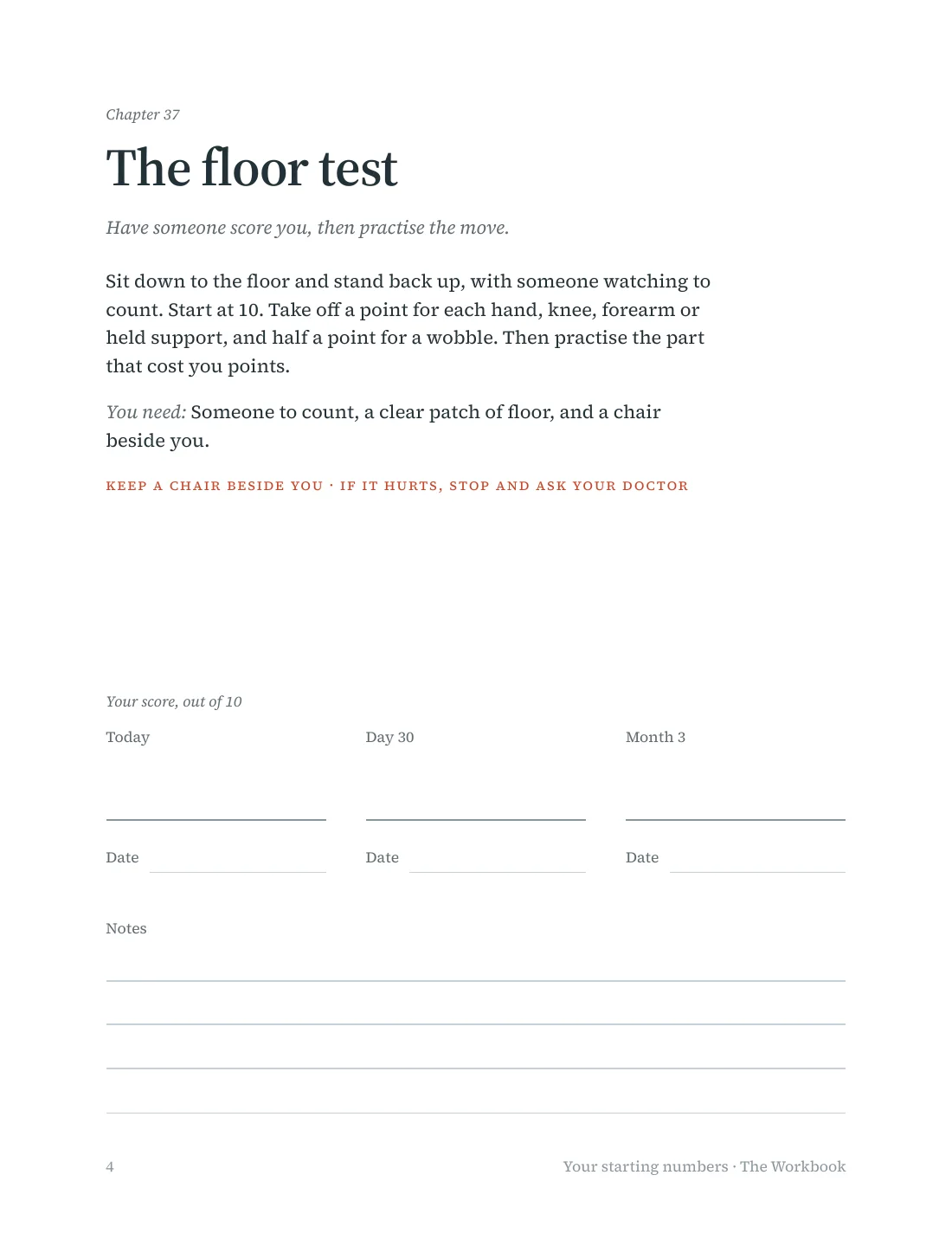
The home test sheets
A page for each test, with space for your score today, at 30 days and at three months.
- The one-page checklistEvery change in the book on a single sheet.
- The rule check and the logsTick the rules you follow, and log your sessions, sleep and meals.
- Test the next rule you hearA sheet for checking a new claim yourself, with one filled in as an example.
Is it for you?
Yes, if
- You train a few times a week and want it to count.
- You’ve picked up rules from the gym and the internet and can’t tell which are true.
- You’d rather see the study than take someone’s word for it.
Not if
- You want a diet or a meal plan.
- You want a guaranteed result.
- You need medical advice.
The book, plus the Workbook free
- The book: 42 chapters in six parts, 36 myths and 6 home tests
- 80+ published studies, listed chapter by chapter
- Free bonus: the Workbook, with the 4 protocols as cards, the 30-day plan, the one-page checklist, the home test sheets, the rule check and weekly logs
One payment. Both PDFs download as soon as you pay.
3-day money-back guarantee
If the book isn’t for you, email us within 3 days and we’ll refund you. You don’t have to give a reason.
Questions
I’ve bought fitness books before and never used them.
That’s why the Workbook is in there. It gives you something to do with each chapter, and a month of ticking off one change a day is easier to stick with than a book you mean to finish.
Can’t I find this online for free?
The rules, yes. The studies behind them are harder to get at, because many are behind paywalls and they’re written for researchers. We read them and wrote up what they found in plain English. If you follow the account, you’ve already seen short versions of some of these.
Is it for someone like me?
Each chapter says who was tested, so you can judge for yourself. Some of the studies tested only women, one tested people in their seventies to nineties, and some were beginners. The lifting chapters mostly tested young men who already lifted, and they say so. If you don’t go to a gym, 22 of the chapters, on sleep, food, moving more and the home tests, don’t need one.
Who’s behind it?
The Fitness Research, the account that tests one fitness rule per reel. We don’t show our faces, and we’d rather you judged us by the sources, which are all named in the book. We don’t sell supplements or coaching.
Aren’t a lot of these studies small?
Yes, most are. Each verdict is marked with how strong its evidence is, so you can tell a solid answer from an early one and decide how much to change because of it.
Is $5 worth it?
It costs less than one session with a personal trainer, and the Workbook comes with it. If you decide it wasn’t worth it, ask for your money back within three days.
I already know most of this.
Then it’ll be a quick read, and you’ll find out whether the ones you know are right.
I don’t have time to read a book.
A chapter takes a few minutes. You can read them in any order, or go straight to the protocols in the Workbook.
Is it a diet, or a training programme?
No. You keep doing what you do now and change one thing at a time.
Why not buy one of the big health books instead?
Many of them explain how the body is supposed to work. This one looks at what happened when someone tested the rule on people.
Buying and printing
What do I get?
Two PDFs. The book is the 42 chapters and the references, with 6 × 9 in pages, easiest to read on a tablet, a laptop or paper, though it opens on a phone if you zoom in. The Workbook, the free bonus, has everything you print and use: the protocols, the 30-day plan, the checklist and the test sheets, on US Letter pages. Both download straight after you pay.
Do I need a printer?
For the Workbook, yes, or a print shop. You can read the book on a screen. On A4 paper, choose “fit to page”. Print the protocol cards on one side only so you can cut them out. You don’t need to print it all at once: start with the test sheets and the 30-day plan.
How do I pay?
By card, through the secure checkout at the bottom of this page. The download links arrive straight away.
Do I need any equipment?
Most chapters need nothing. Some of the home tests need a stopwatch or a second person, the twelve-minute run needs a route you can measure, and the grip test needs a grip meter. The lifting chapters assume you train in a gym.
Is it medical advice?
No. If you have a condition, take medication or are pregnant, ask your doctor before you change anything.
How do refunds work?
Email support@thefitnessresearch.com within 3 days of buying and we’ll refund you.
Stop following rules nobody showed you the study for
Read the part you care about tonight, and use the Workbook to keep track of what you change.
- 42 Things You (Probably) Got Wrong About Fitness, PDF$5
- The Workbook: protocols, 30-day plan, checklist, test sheetsFree bonus
- 3-day money-back guarantee
- Secure card payment through Stripe
- Not medical advice